Blog Archives

Staffing Transitions Announced

Spring brought new roles in the organization for some NCRPC staff members.

Emily Benedick was named Executive Director in March, succeeding Doug McKinney after his retirement. Adding to the leadership team, Lisa Peters accepted the Assistant Director position previously held by Benedick. Peters has been with the organization since 2011 and also serves as Homeland Security Fiscal Coordinator.

Other position changes effective April 1, 2020 include Amanda Horn being named Community Development Representative. She joined the staff in 2019 as Administrative / Research Assistant. Brett Beck was named NCKCN Assistant Systems Administrator / Outside Plant Manager. He has been with the organization full time since 2006. Michael Draemel, who has been with the organization since 2016, was named NCKCN Assistant Systems Administrator / IT Plant Manager.

“The success of our organization and services we offer would not be possible without a great staff,” Executive Director Emily Benedick said. “These individuals have proven their commitment to high-quality work over and over again.”

This article appeared in the May 2020 NCRPC Newsletter.


Finance Program Assists in Transition of Salina Business

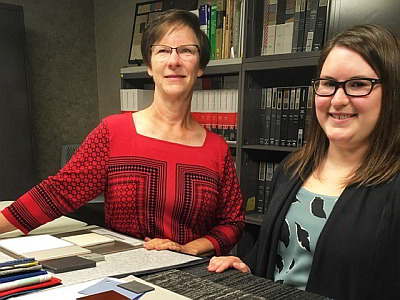
design central staff working at desk

Suzanne Hokett (left) and Audrey George (right) have had an important role in Design Central’s business transition. (Courtesy Photo)

A loyal customer base and a desire to see the business continue were key motivators in Design Central’s succession planning.

Located in downtown Salina, Design Central provides commercial interior design services throughout Kansas. The business specializes in the design and furnishing of new and remodeled spaces such as libraries, schools, hospitals, clinics, community centers, offices, and more.

“Small, locally owned businesses are so important to our communities, but they can be challenging to transition,” Design Central’s former owner Suzanne Hokett said. “We have lots of loyal customers and I wanted there to still be local service and a local support system for them. Also, I knew that if Design Central stays in Salina, that money stays locally as well.”

The NCRPC Business Finance Program, through its NCKCN-Four Rivers Down Payment Assistance Loan Program, was one of the funding sources used for the transition to new ownership. Other funding came from First Bank Kansas, the seller, and investment by the new owners, Scott and Meghan Bird.

“Having funds available to an investor is invaluable for small business,” Hokett said. “First Bank Kansas was great to work with and they brought NCRPC Business Finance services to the table. The process was very seamless.”

Design Central President/Designer Audrey George now manages the day-to-day operations for the business.

“The whole transition has been a wonderful opportunity for our business,” George said. “The new owners have empowered the employees to keep doing what they know how to do — and that is providing quality design services and commercial furniture to businesses.”

To learn more, visit the NCRPC Business Finance Program or Design Central.

This article appeared in the May 2020 NCRPC Newsletter.


Benedick Named Executive Director

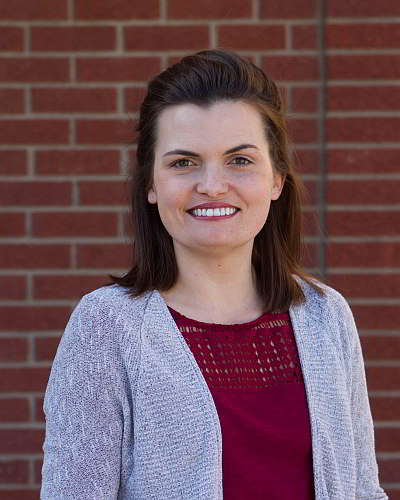
benedickThe North Central Regional Planning Commission Executive Board has named Emily Benedick as the organization’s new Executive Director.

She will succeed Doug McKinney, who last year announced plans to step down from his position this spring. McKinney began with the North Central Regional Planning Commission in 1986 and has been Executive Director since 2008. McKinney and Benedick will collaborate to lead the organization until McKinney’s last day on May 1.

Benedick has been with North Central Regional Planning Commission since 2015 and was named Assistant Director in 2018. A native of the Saint Louis, Missouri, area, Emily graduated with a master’s degree in landscape architecture from Kansas State University.

“I am excited and honored to be named the next NCRPC Executive Director,” Benedick said. “As an organization, we have been advancing rural Kansas since 1972 thanks to the passion and hard work of the executive directors before me. I am eager to explore what new opportunities we can bring to North Central Kansas, as well as continue to ensure our current program offerings thrive.”

Benedick will be just the fifth executive director in the nearly 50 years since the organization was formed.

“We are looking forward to the strategic growth of the North Central Regional Planning Commission under the leadership of Mrs. Benedick,” Hannah Stambaugh, NCRPC Board search committee chair, said. “She brings innovative ideas and passion for the organization and the region as a whole that made her an excellent choice to lead the North Central Regional Planning Commission after the retirement of Mr. Doug McKinney.”

McKinney leaves behind a legacy of 34 years of service that touched the lives of many Kansas residents.

“Doug will certainly be missed,” Stambaugh said. “His contributions to the entire region and state are appreciated. He will always be the biggest advocate for successful communities and economic growth.”

This article appeared in the March 2020 NCRPC Newsletter.


Reflections on Transitions, 34 Years with Organization

Column by Doug McKinney

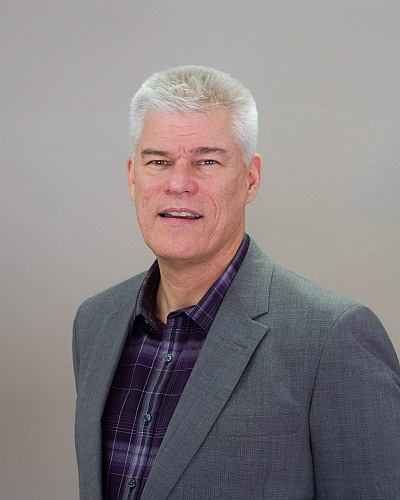
mckinneyAs many of you know by now, I am stepping down as Executive Director of the North Central Regional Planning Commission soon. It is time to place more focus on ailing family members and other important matters.

Transitions in life take us to new adventures and new challenges. It is not always the precise path we have embarked on. But, per the ancient author Jeremiah, it can mean God’s plans are to prosper you and not to harm you, to give you hope and a productive future. As of May 2, 2020, that is where my faith and hope will be directed after 34 years here at North Central Regional Planning Commission.

My career with the NCRPC began in 1986 when the organization was like a distressed teen and ceases when it is quite mature and riding a tall wave for purposeful activities as well as staff, beneficiary and board member engagement.  Working here has enriched my knowledge of a sense of place, value of communities and the rich blessings God provides us all.

My appreciation is strong for this three and half decade opportunity. From the Emergency Aid Center in Salina to Russell Stover negotiations to seeing a rural water district supply water to households previously having to truck it in — the memories of making a difference abound. I am grateful for John Cyr for having faith and coaxing me west away from going to Missouri, for my wife for willingly putting down roots here, for cities and counties and local leadership working with NCRPC all these years, for the many dedicated colleagues, for supportive and engaged board members, and for legislators and officials at the state and federal levels supporting what great value NCRPC and its affiliates bring to Kansas.

I am confident that North Central Regional Planning Commission will continue to thrive through collaboration and partnerships. The NCRPC staff is top notch. The organization will continue to inform, help resolve unfunded mandates, improve housing, support training of first responders, enhance businesses, build out infrastructure and broadband, and inspire a vast community of believers as to the benefits of rural Kansas.

This article appeared in the March 2020 NCRPC Newsletter.


Rural Voices Winners Announced

Two high school seniors in North Central Kansas are being recognized with the John R. Cyr Rural Voices Award for submitting the top entries in the 2019-2020 Rural Voices Youth Contest sponsored by the NCRPC.

Jake Toole, a senior at Washington County High School, and Julisa Wolf, a senior at Ell-Saline High School, submitted the winning entries in this year’s contest. Each will receive a cash award of $850. The contest awards are named in honor of John Cyr who served for 22 years as the NCRPC Executive Director. Since 2006, NCRPC has awarded more than $24,000 through the Rural Voices Youth Contest.

Students had the option to submit an original essay or video reflective of this year’s contest theme of “Rural Kansas…Rural by Choice.” High school seniors in the 12-county NCRPC service area were eligible to participate.

“Sponsoring the contest is one way for our organization to encourage students to reflect on the many positive qualities of rural Kansas as they get ready to enter the next phase of life,” Doug McKinney said. “We are always impressed by the ideas presented in these entries.”

View the 2019-2020 winning entries.

This article appeared in the March 2020 NCRPC Newsletter.


Communities Awarded CDBG Funds for Projects

Several North Central Kansas communities recently learned they will receive grants to help complete a variety of improvement projects. The funding comes from the Small Cities Community Development Block Grant (CDBG) program administered by the Kansas Department of Commerce.

NCRPC staff assisted with the following projects and will provide project administration.

The City of Belleville was awarded $175,000 to purchase a new fire truck. The city will contribute $175,000 in matching funds.

The City of Chapman was awarded $600,000 to build a non-discharging wastewater treatment facility. The city will provide $3,535,794 in matching funds it secured through USDA Rural Development.

The City of Clay Center was awarded $250,000 on behalf of a local business owner for commercial rehabilitation of a dilapidated downtown building. The local business owner will provide $161,757 in matching funds.

The City of Concordia was awarded $561,660 to make sanitary sewer and storm sewer improvements in the city. The city will contribute $561,661 in matching funds.

The City of Hanover was awarded $600,000 for water distribution system improvements. The city will provide $3,730,247 in matching funds it secured through USDA Rural Development.

The City of Lincoln Center was awarded $600,000 for water distribution system improvements. The city will provide $605,961 in matching funds it secured through Kansas Department of Health and Environment.

The City of Marysville was awarded $600,000 to build a new fire station. The city will contribute $938,448 in matching funds.

The City of Miltonvale was awarded $35,212 to complete a demolition project. The city will contribute a total of $35,213 through local city funds, force account labor and waived landfill fees.

The City of Minneapolis was awarded $300,000 for housing rehabilitation and demolition. The city will contribute $13,700 in matching funds.

The City of Solomon was awarded $600,000 for water distribution system improvements. The city will provide $1,416,424 in matching funds it secured through Kansas Department of Health and Environment.

To be awarded CDBG funds for a project, local government units must meet at least one of three program objectives: benefit low and moderate-income persons; prevent or eliminate slums and blight; or resolve an urgent need where local resources are not available to do so. Learn more about the CDBG Program at the Kansas Department of Commerce or contact the NCRPC office to discuss project needs.

This article appeared in the March 2020 NCRPC Newsletter.



Positive Results Continue for Home Ownership Pilot Programs

home ownership logoFinancial incentives offered through the NCK Home Ownership Pilot Program’s 2019 expansion to Ellsworth and Lincoln counties assisted in the purchase of 10 homes in Ellsworth County, 6 homes in Lincoln County and 1 in Mitchell County.

The program officially expanded to Ellsworth and Lincoln counties in June 2019. It assisted home buyers with down payment and closing cost assistance. The total value of the 17 homes was $1.4 million, with $204,000 coming from the pilot program.

The NCRPC administered the program offered by its new housing non-profit, NCK Housing Opportunities, Inc. The non-profit serves Cloud, Ellsworth, Jewell, Lincoln, Mitchell, Ottawa, Republic, and Saline Counties. An award from the Dane G. Hansen Foundation of Logan, Kansas, assisted in the creation of the loan and grant pool, along with a donation from the NCKCN NCK Business Development Fund.

Of the home buyers who used the pilot programs in each county, 41% reported taking a new job in the last 12 months and 44% reported the program was a factor in their decision to take the job. In addition, 64% bought their first home. Results also indicated that 45% of new residents who moved to their community within the last 12 months were between 30 and 49 years of age. According to research by University of Minnesota Extension Educator Ben Winchester, this average age group is the most likely to move to a rural area.

Similar pilot programs have been completed in the City of Marysville and Cloud and Mitchell Counties. Another pilot began in Dickinson County in March. Additional pilot programs are scheduled to launch in Ottawa and Republic Counties in late April. Learn more about the Home Ownership program.

This article appeared in the March 2020 NCRPC Newsletter.



NCKCN Expands to New Location

nckcn logoThe North Central Kansas Community Network (NCKCN) is expanding! NCKCN now provides its fixed wireless Internet service to residents and businesses in another great rural community: Scandia, KS.

NCKCN is an Internet service provider that was originally formed in 1995 to help connect communities that were underserved by cable or fiber. Today, it continues to adapt and grow to meet the changing technology demands in North Central Kansas. NCKCN is a 501(c)3 non-profit affiliate of the NCRPC.

With speeds up to 50Mbps, wireless Internet customers are able to stream movies, watch ball games, play online games, or run a business with ease. Scandia is the tenth location in the growing list of NCKCN wireless Internet communities. Other locations include Ada, Belleville, Beloit, Clyde, Concordia, Jewell, Lincoln, Mankato and Minneapolis.

NCKCN also offers 16 NCK-WiFi hotspot locations distributed throughout seven communities. NCK-WiFi, is a partnership of NCKCN and Cunningham Telephone & Cable (CTC).

See the latest NCK-WiFi locations and learn more about NCKCN here.

This article appeared in the March 2020 NCRPC Newsletter.



Rural Voices 2019-2020 Winners Announced

Congratulations to the 2019-2020 Rural Voices winners!

Jake Toole, Washington County High School

Julisa Wolf, Ell-Saline High School

The NCRPC sponsors the Rural Voices Youth Contest each year to engage high school seniors in North Central Kansas in thoughtful reflection on rural Kansas and to promote a discussion among citizens based on their insights. The 2019-2020 theme was “Rural Kansas…Rural by Choice.” Read the winning entries below.


The Reasons to Choose Rural Living

By Jake Toole

I’ve lived in Washington, Kansas nearly all of my life. It’s a nice little town with a population of around one thousand people. My parents made the choice to move to a small town when I was young because they believed I would benefit from rural living. Why did they make that choice when so many others do not? I believe the answer is that so many do not know what they are missing. To help new families choose rural life we must help them understand the benefits of rural living, we must show them that jobs can be found and created in our area, and we must persuade them that small-town life is the right choice for their children.

There are many benefits to rural living. All of my friends live within bike-riding distance of me. I know everyone in town, (or at least my parents do). I grew up with the benefits of having a yard – and so did every other kid in town, whether rich or poor (which, on a side note, means plenty of potential customers for my teenage mowing business). Plus we have large public parks, ball diamonds, and open areas to take advantage of. And if more space is needed, there’s always a friend’s farm to go hang out at or the state lake just down the road to have some good outdoor fun. My grandparents live “out of town” which is less than a 5-minute drive from my “in town” home. I can pop out anytime and be outside city limits, giving me a chance to let our dog run free, to practice target shooting or shoot fireworks in the summer at a moment’s notice. I can also drive to the grocery store, the gas station, or the pharmacy and be back home in less than 5 minutes. There is no such thing as traffic and no time is wasted sitting in rush hour on the way to work every day. Although time is often added to a “quick” trip because you run into someone who wants to ask about your latest endeavor at school or inquire if your grandpa got over his cold or if your Mom is enjoying her new flowers at the house. That’s what makes rural life so great – it is truly a community – a place where we have common interests, goals, and love for our shared lives.

Unfortunately promoting rural living has one big challenge: jobs, or rather the lack thereof. Young couples need the assurance of good jobs and who can blame them with student loans to repay, small children to care for and long-term savings to consider. According to the United States Census Bureau’s American Community Survey, the largest employment sector in Washington County is agriculture, the next largest is education and healthcare, and third is retail trade. According to Data USA, the number of employees in Washington County has declined by 1.55 percent from 2016 to 2017. While the job situation for our county may not look too bright, there are other options. Washington, Kansas, is about a half-hour away from several larger towns: Marysville to the east, Belleville to the west, Clay Center to the south, and Fairbury to the north. Although none of these towns are large by most standards, each has many more job opportunities both for blue-collar workers and for those with higher education. My father is a CPA and makes the twenty-minute commute every day to his accounting firm job in Marysville. This short commute, compared to 45 minutes in rush hour traffic, is a much more viable option for a young couple in need of a well-paying job. Allowing them to experience small-town life while working in a larger town. However, the commuter’s life is not the only option. Washington County is ripe with entrepreneurial opportunities. Our town has many small businesses that provide goods and services. If the service is needed a business can survive and thrive. One example is the hair salon industry – we have six independent hair salon businesses in our small town. Everyone needs to get their hair done. We have a family-owned grocery store that’s been serving our community for generations. There are also many stores around the area that provide services and supplies for farmers. These businesses also draw in customers from the rest of the county and beyond, helping to boost the local economy. Although these small businesses may not have a large customer base, they DO have very little competition. Entrepreneurs have a great opportunity to find a niche and focus on building a business, instead of undercutting the competition.

So how can we attract people to our community so they can experience all these benefits? I believe the answer lies in my parent’s example. My mother grew up in the same small town we live in now. When I was two years old, my parents agreed that sending me to a massive city school with class sizes of five-hundred or more was not what they wanted for me. They wanted me to know my classmates and to develop friendships with them over the years of my schooling. They wanted me to be well rounded by being involved in a variety of things in school. And most of all they wanted me to be an actual person to my teachers, instead of just another name to get to know for one year and then never really see again. All of this was possible when my parents decided to move to my mother’s hometown of Washington, Kansas. I’ve known my classmates since kindergarten. My grade school teachers still cheer me on at my high school cross country meets. I participate in band, chorus, art, forensics, scholar bowl, track and more. THIS is how we appeal to young couples – through their children. People will make the hard choices to move, to try new jobs, to leave malls, movie theatres, and sporting arenas if it means something better for their children. Let’s show them the opportunities that exist for their children in our small towns – to have a yard, to ride a bike in town, to know their neighbors, to walk a dog down the street. Let’s show them the opportunities for their children in our schools. The opportunities to truly know their classmates and teachers. The opportunities to allow their children to dip their toes into a variety of fields and activities, so they might truly find what they want to pursue. But how can we spread the word of all these great opportunities for small town living? I propose we advertise where the young couples are. Facebook ads are a great way to promote rural living as they can be targeted by age and location and are relatively cheap. I also propose radio advertising in large, metropolitan areas during rush hour traffic. What better time to convince listeners of the beauty of wide open spaces and a simpler life, than while they are sitting in a traffic jam on their way to work?

Obviously, rural living isn’t for everyone. But I believe that if more people knew all the benefits of small-town life for themselves and for their children, they would live rural by choice and never look back.


Rural Voices Youth Contest

By Julisa Wolf

When we, as teenagers, leave our homes to pursue our future careers in college or begin our time in the workforce, we tend to forget where our lives truly began. I believe that as we grow older, we reflect on all that we have accomplished and achieved. We ponder the great things we have received. We may have financial security, or we may also be well endowed with numerous items that show how wealthy we are. We may be recognized and revered by the community we live in. One might say that we are living our best lives. However, all of this fortune, comfort, and recognition means nothing, because there is a void inside ourselves that cannot be filled with tangible items. There is something that is missing, but we try not to pay attention and instead ignore it. We think that our money and considerable success will aid us in forgetting or ignoring the void, but it will always be there, until a change is made.

Over the course of my high school career, I have had the opportunity to hear some incredibly powerful stories of how people have managed to find their way back home to pursue their dreams where they grew up. I have been able to actively sit and listen to their vivid descriptions of how they got to their starting point that inevitably led them to their hometown. These deep and emotional narratives have impacted my life significantly.

A teacher of mine, we’ll call him Mr. Lyn, shared his story with our class. I looked forward to hearing his story because I thought of him as ancient and sage, for he was always willing to share his experiences so that others could learn from him. Mr. Lyn began his story by describing how successful he felt for graduating high school. Not long after, he moved away from his hometown to pursue a career in agriculture at a four-year university. Obtaining an agriculture degree was a dream he wanted to achieve since he was a young boy. Mr. Lyn’s ultimate goal was to make a difference somewhere by impacting the people around him to be better versions of themselves. He described his love for the experience he had and that he would most certainly do it again if given the opportunity. Nevertheless, he also shared that while he was gone, he felt alone and stressed. There was something inside him that just didn’t sit right. It was like a prickling on the back of his neck, a constant discomfort that never seemed to go away.

While in college, Mr. Lyn decided to further his passion for agriculture by becoming an educator because he wanted to share this passion of his with the younger generation. After graduating, he soon got a few jobs teaching around the state, but he still maintained close ties with the university he had attended. He was a very well liked man who was easily recognizable. His life was full of prosperous blessings, but still, despite all the attention he received, he could not stray away from the loneliness that burrowed in his heart and mind. Mr. Lyn wondered whether he needed to look at the world from different places. He thought to himself, perhaps this will fill his void? Maybe afterwards he would feel better and be able to continue, so he took on traveling. Although he had plenty of company and was genuinely enjoying himself around different countries, the sadness continued. He began to think that perhaps this wasn’t his purpose in life. All of the knowledge he had gained in school, all of the experiments and beautiful things done in college, he could no longer do. Every place he would travel to did not feel right for him. It was as though he did not fit in. Shortly after, he received disturbing news that his father was gravely ill. He returned home…only to bury him.

A few years after his father’s passing, he had an epiphany–he was no longer depressed. During these short years, he was hired at his alma mater, the very same place he graduated high school. He was teaching what he loved most–agriculture. He was given the opportunity to teach diverse students from ethnic backgrounds and learn both with and about them. Although Mr. Lyn returned home for unexpected and world-shattering reasons, there was a blessing hidden underneath the dark cloud. For he was able to continue sharing his passion for agriculture with students who he had common interests with. He immediately knew that this job was what he wanted to do, but most importantly it was where he belonged. As the years go by, Mr. Lyn’s story continues to inspire several of his students in the same manner in which I have been inspired. He taught us that sometimes, we do not need to travel the world to make a difference. Sometimes, the difference can be made in our own community.

Mr. Lyn set a goal for himself and achieved it. He educated us with the proper way to give back. Everyday we learn in class about what we can do for others around us and what that feels and looks like when we do things for others. For example, our annual canned food drive, we give food to local families in need during the holidays. Or our community garden, where we gather fruits and vegetables to donate to our school cafeteria for lunch. With his knowledge and kind heart, he has helped provide several amazing things to his community table that go beyond the examples previously described.

In conclusion, to reiterate the Rural Kansas question, what can be done in our communities for people to want to come or return? What challenges must be overcome to encourage others to be rural? The first step is that we need to have faith in ourselves and determine and set goals. The steps taken to get to the end goal aren’t as important as meeting the needs of our community. The second step is that we must learn to collaborate as a community so that we can easily recognize and address the highest needs of our rural areas. In every place we choose to settle down in, there will always be something that we can help with. No matter the profession, no matter the person, the amount of work is endless. One possible solution to the challenges that need to be overcome is by making our communities more friendly and welcoming. By making the community approachable, comfortable, and at-ease, it shows people that anything they contribute is useful and resourceful. The people of the community need to feel as though the location where they choose to make a difference, suits them. They need to feel that they belong.


The next contest deadline will be December 1, 2020. Check back in the fall for details on the 2020-2021 Rural Voices Youth Contest.


Home Ownership Pilot Program Results Indicate Positive Impact for Marysville

Financial incentives offered through the Marysville Home Ownership Pilot Program assisted in the purchase of 17 homes in the community since February 2018.

The program provided home buyers with down payment and closing cost assistance. The total of the 17 homes was just over $2 million, with $186,400 coming from the pilot program.

Primary objectives of the program were to help make home ownership more affordable, be a catalyst for first time home buyers, benefit employers in recruiting and retaining employees, reduce employee time spent commuting to work, and market the program to alumni considering a move to live closer to friends and family.

Grant funds for the program were provided through contributions from the Marysville Community Foundation, Guise-Weber Foundation, R.L. and Elsa Helvering Trust, Citizens State Bank, First Commerce Bank, and United Bank & Trust, all of Marysville. Loan funds were provided by the North Central Kansas Community Network, Co. (NCKCN)-Four Rivers Business Loan Pool. NCRPC administered the program. NCKCN is an affiliate of the NCRPC.

According to NCRPC Home Ownership Program Manager Debra Peters, survey results of home buyers who accessed the program indicate positive local impacts. “The employment impact was good,” Peters said. “Of the home buyers, 50% reported taking a new job in the last 12 months and 39% reported the program was a factor in their decision to take the job. We are pleased with the results.”

Other program outcomes include 86% of home buyers reported the program was a factor in their decision to purchase a home at this time, 57% bought their first home, 17% graduated from Marysville Senior High School, and 57% moved from outside of the NCRPC 12-county service area — including Clay, Cloud, Dickinson, Ellsworth, Jewell, Lincoln, Marshall, Mitchell, Ottawa, Republic, Saline and Washington Counties. In addition, the program had an impact on education in the community. Five children were new to the local schools and program applicants indicated 8 more will be entering school within the next 5 years.

Similar pilot programs have been completed in Cloud, Ellsworth, Lincoln and Mitchell Counties. Future plans include the expansion of pilot home ownership programs to each of the remaining counties in the NCRPC 12-county service area, pending the availability of funding. Results of these pilot programs will be used to develop a permanent regional home ownership program.

This article appeared in the January 2020 NCRPC Newsletter.


Archives